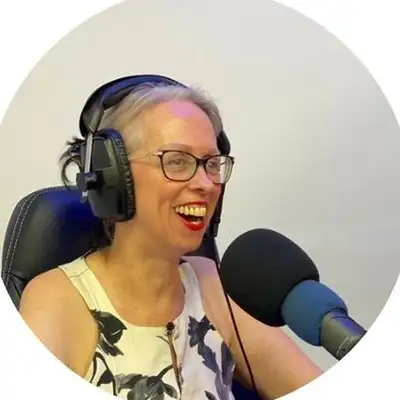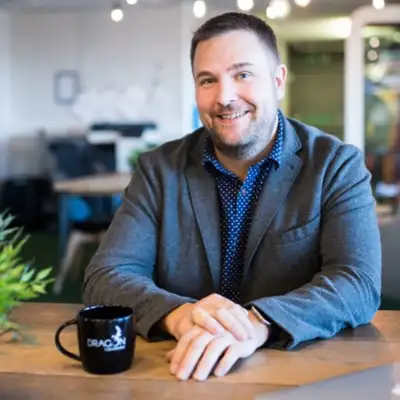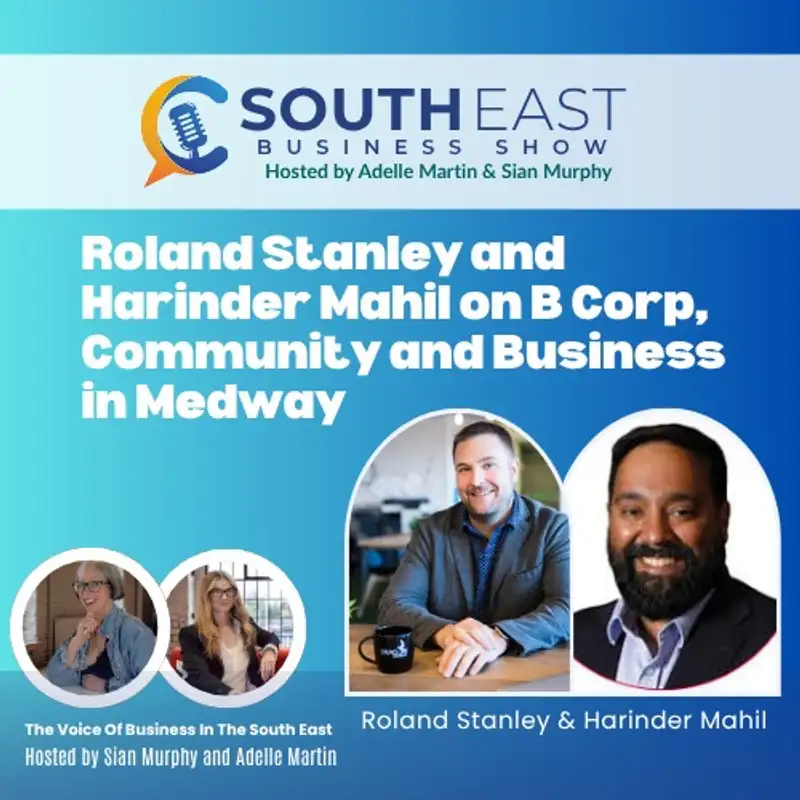
Hello, and welcome into this month's edition of the South East Business Show. I'm here today with my cohost. Adelle Martin. And we are also going to say thank you so much to the Executive Resilience Coach, is the sponsor for this show. And in the studio with me today, we have Roland Stanley, who is the founder of Dragon Coworking, which I think is just sort of the foundation of what's going on business in Medway.
Sian:You hold events, you have co working spaces, don't you? You also have offices. Generally, probably connected to everybody that anybody needs to be connected with, aren't you?
Roland Stanley:Oh, thank you, Sian. You explained it perfectly, Sian. I don't have to say anymore.
Sian:Welcome, and thank you for joining us on the show today. Also with us, we have Harinder Mahil, who is the portfolio holder for Economic Regeneration. Now, that's actually the shortened version, okay? It is. It's actually much longer.
Sian:And I'm going to ask him to explain that himself, because my handwriting and my memory really just doesn't stretch that far. He's also the owner of the Gurkha Fire, which is a it's sort of one of those establishment restaurants, isn't it? You know, when you say to anybody in in Medway, oh, you know, I'm having my event out or I'm going to the Gurkha fire, people, they just know what you're talking about. And they also know the sorts of, you know, the quality of what they're going to be getting when they get there. I'm not just saying that, by the way.
Sian:No, I don't anybody who knows me will tell you I don't do kind. I would have just said that you own the Gurkha Fire and we would have just I left would have just left it at that. So no. So really, you're coming at sort of on the show today. Really, what I would like is to get your take on business in the South East from actually both points of view.
Sian:As somebody who is a portfolio holder on Medway Council and getting the point of view of the council, of council officers, of other members, but also interacting with businesses, and alongside your take as a business owner. So welcome welcome to the studio. And we're gonna be exploring, oh, a number of different themes today. We're gonna be exploring, Roland, your achievement recently. So although it's a recent achievement, you've been working up to this, haven't you, for a while?
Sian:Oh, yeah. Yeah. This is doing wonderful. Of being b corp. Community building and, you know, just sort of exploring what community is, what it's all about.
Sian:And I think it's it's become a real buzzword, hasn't it, community? It's a sort of thing that we throw out there, but it can be a little bit simpler, but also more complicated than perhaps we
Roland Stanley:Yeah, think it think community is one of those things that people say it's a buzzword. People love to stick it on their websites, people like to stick it off Facebook and LinkedIn and everywhere. But what is community? How do you measure it and actually what is it and what actually if you actually dig deep down into it what is a community? For me, community is just bringing people together and it's almost almost a feeling.
Roland Stanley:It's almost one of those things where you can actually you can't quite measure it, but you can actually feel it as soon as you walk into a space. And I know in a co worker's space, you can feel it as soon as you walk in there. Because I know that anyone can walk up to anybody and they would help them out. I know that anybody if anyone had a problem, they could be helped out by anyone in the room, and it's it's that feeling of of of what actually community is.
Sian:It's it's just an intangible, and and you're right. You know, in business, we're always looking at what can we measure, and also how can we set boundaries. Because it can be quite difficult sometimes to set boundaries in the community because it requires everybody to sort of join in with the sense within that community. Yeah.
Roland Stanley:I mean, we've talked I've talked about it so many times, other co working space operators and other businesses about how you measure community. Do you measure it through engagements on your booking platform or having people come to events or anything like that? But it's a challenging one to put together. Just looking at the feedback we get and how other people talk about us as well, that's how we know that we do have a good community within a space. Community without being clicky, I think that's
Sian:really important.
Adelle Martin:Yeah, that's as well.
Sian:It is so difficult isn't it?
Roland Stanley:Yes, and there is sometimes a fine balance between those two and sometimes you have to, especially when you try to bring new people
Adelle Martin:New people
Roland Stanley:in, you want people to be welcomed but obviously you've got to have people who should be there to know each other really really well. So yeah, community without being clicky, I think that's the key to anyone trying to build their own community.
Sian:And it's also sometimes when you're you're running a co working space there, people are there for a reason. They're also there because their cat isn't there, their dog isn't there. Although you can bring dogs in too. Absolutely. Yes.
Sian:Co working, can't But the dog isn't barking, the neighbor isn't knocking on the door, the children aren't there, you know, a partner isn't interrupting them. So they're there to get on with their work as well. And so it's about setting that sort of expectation isn't it?
Roland Stanley:Yeah, mean most people come here for lots of different reasons. So we found out over the years and some people want to be really fully engaged in that community and from day one they want to sit and have lunch, want to come see events, they want literally get up and have a coffee every twenty minutes so they can actually chat to somebody, mainly because I've been working over three or four years and haven't spoken to other human beings. Where other people just want to come in for them being part of the community is just sitting at a desk, just hearing other people around them, just having some background noise, actually sort of just being part of something without actually being fully involved
Adelle Martin:So in
Roland Stanley:community can mean lots of different things to lots of different people. For some people just being around other people knowing your name, saying hello to people in the morning, those sort of things, that's what they're after and other people they just want to be fully involved and go through everything, do everything, get other people involved.
Sian:Sometimes I think it's good to, and this may be part of it, is to actually just be in a space where somebody's doing something similar to you.
Roland Stanley:Yes.
Sian:So you may not be talking to anybody, you may have your headphones on, but you're in a space where people are doing work. They're working on their business. You're not entirely on your own. And, you know, you're you're not sat in a cafe, although I'm a great cafe dweller. You're not sat in a cafe where everybody's playing with their children.
Sian:You haven't gone to a jungle gym or something, and you're trying to write something. It it sort of gives you that sense of grounding, I feel, in in business to be around. It's almost like having body doubles and buddies where you may not be all working together, but you are all working.
Roland Stanley:Yeah. That's it. And we've got lots of different people doing lots of different things. Some people make money in weird and wonderful ways. But essentially, if you're running a business, you've always got the same problems, you've always
Sian:got the same you do.
Roland Stanley:Right. Service, whatever it does. And with your growing, with your scaling, whatever you're doing, it's pretty much always the same problems and we hear the same things come over again and again. Say, well, they had that problem last week, can I speak to them? People come out and have a coffee and they say, you know, this is really getting me down, I've got this issue.
Roland Stanley:I say, just speak to so and so, they do something similar, I know they've sorted it out and over the years you hear the story again and again, you know, people say, I wish I'd come here earlier and just had a chat with other people. So I thought the issue was just me. It turns out, no, pretty much every other business is having that issue, and I just thought it was me. So just getting out and talking to people. That's what the co working space is all about, bringing people together so they can actually have those conversations.
Sian:One thing I just wanted to ask, because I was involved a long time ago in working with a space. So I was helping with marketing and working with a space where they'd set up as offices. They just happened to have a cafe there. And then what they decided was they wanted the cafe and everything in there to become a it it needed to become a community. And everybody needed to be gathering together in the cafe and doing all of this sort of thing.
Sian:But it just wouldn't happen. But it wasn't a coworking space, and it wasn't a coworking cafe either. Do you think that do you think that or did you set this up? When you set this up, did you set it up with the intention that yes, it was going to be a co working space, I know you have offices, that it was going to be a community? Or was that something that evolved and then you sort of stood back and went, oh, hang on a minute.
Sian:We've got a community. Let's build on it.
Roland Stanley:Yeah. So it took me about six or seven months to work out exactly what we were selling. So at the very Oh, And when it worked out that when I first started the co working space, so I fell into it. I fell into it a little bit by accident. Was literally some spare space and I was like, I don't pay business rates for nothing, I want to make it sort of work.
Roland Stanley:Somebody mentioned to me about co working. That's a brilliant idea,
Harinder Mahil:that could
Roland Stanley:work really well in Medway. So we've got these lovely desks, we've got a nice coffee machine, we built the only had six offices back then and then started getting people in. And sort of back then I knew lots of people were coming in so we also already had a little community going already and then people came from another co working space that closed down, so they already had a little sort of community of their own and then we just joined it all up. But the point I realized exactly that community is what we're actually offering is our first Christmas party. We had it in a co working space and we literally I think it was probably about eighteen, twenty of us and we sat round, we got pizzas in, we played board games and everyone was smiling and everyone was laughing.
Roland Stanley:It was just like having like a family Christmas. It was that moment, was almost like probably 11:00 at night after a few drinks it suddenly like switched to my head and this is what we're here to do. We're here to bring people together. We're actually here to bring people together. We wouldn't meet normally but we've all got all got similar sort of issues and things.
Roland Stanley:And like now, they're here, they're laughing, they're joking, they're all chatting together. And that is what we do, to bring people together
Sian:and I'll take tell you what what it's like in in a way, it's I I came from a corporate background, and I think most of us have worked at some point for somebody else. And it was like it it the Christmas dues, if you like, the cakes on your birthday, all of that sort of thing, we just take for granted as part of our our working life. And it goes, doesn't it? Yeah. As does the ability to go totting down the corridor, go into somebody else's office, slump down on the chair and go, guess what's happened?
Sian:What what shall I do about George or he's causing these problems? It's having somebody else to talk to and somebody else to share some celebrations with. Somebody else to share the sort of celebrations that we all celebrate like Christmas or, you know, birthdays, but also celebrate your wins.
Roland Stanley:Absolutely. Yeah. And we've had a few people recently start their own business up. Literally after they came to work, they came to use a co working space and was employed by other people.
Sian:Oh. And
Roland Stanley:then from that, they've been surrounded by people and they've said, do you know what? I can actually do that. It's just given them that little nudge, that little push they needed to actually go and do their own thing. Because the biggest huge thing coming out of being employed is running your own business.
Sian:It it is. I wish I'd have known how big it was before I just decided, oh, I'll just have me noticing that I'll do. I'll chop off and do that. He's coming along and actually seeing, if you like, in action. And I think it's brilliant that people come along and it just gives them ideas because I think it's somewhere where our schools very often are still falling behind with not including or making it clear that actually starting your own business or becoming self employed is actually a valid route to progress a You don't have to go to university, do an apprenticeship, or go and work in a bank.
Sian:But actually, you can do this, and you can get started yourself. I'm gonna stay with you for the moment, I think, and go on to the b corp. Yes. What so so are you able to explain the process behind that? With you arriving, if you like, the decision to do that.
Sian:I think first of all, if we explain what B Corp is.
Roland Stanley:So B Corp is a certification. It's a certification that you it took us about two years to actually get a very very very involved certification. It's like an ISO
Sian:or But something like that, sort of
Roland Stanley:basically you have to look at every part of your business and the crux of it is you have to be a business that does good. You're not just set up to extract as much money as you can from your community and to take it for yourself, you're there to actually be part of a community, be a business that actually does good within that community. So that's just that's for your staff or our team, that's for the local environment, that's for the local community. So essentially it's an all encompassing certification that once you actually do it you actually get your score to a certain level and you're verified. You can use a B Corp logo and then people know you're a business for good.
Roland Stanley:So it's like one all encompassing sort of certification that takes in environmental looking after your team, looking after your customers. So yeah it's something so it takes two years to actually do. From the start, when I first started Dragon Coworking, I'd never started a business before. I'd taken businesses over and tried to change culture and what the business is actually about, which is really difficult. But when we started Dragon Coworking, I really, really wanted it to be a business for good.
Roland Stanley:A business there to serve the local community, to look after the people that used it and the people that were going to depend a member of the team. So the B Corp certification just really fitted with so many of our things that we did. It's 100% not a box ticking exercise and you couldn't get away with it. If you tried to do the certification, you'd be seen through straight away if you were just purely doing it for box ticking. But it just sort of really just aligns in so many ways with what we're all about.
Sian:So I I know you, and I know how that side of things just totally fits with you as a person. So if we looked at that as a personal thing, that was something that you personally into that for you to do as a personal satisfaction. But there are all sorts of things that we might want to do personally, aren't there? But that doesn't necessarily mean that they're a good business decision. So we have to make that distinction ourselves, don't we?
Sian:What made it a good business decision for you?
Roland Stanley:So over the last few years, especially around the environmental side, more and more people are asking us, you know, how much carbon are you producing every year? Are you measuring your emissions? What's your recycling policies? Do you use plastic bottles within the space? What are you doing to encourage people to not use plastic bottles?
Roland Stanley:And it just got that message got louder and louder and louder. More and more people were asking those sort of things. And we were sort of saying yes we're doing this, should be doing that. And we were doing a lot of these things already, but we just thought the B Corp would actually make us look at it even more. We could actually then put in all the processes to measure everything we do, so like we measure all our emissions now, we have our solar panels installed so we're now generating 50% of our electricity on-site.
Roland Stanley:Things like a no plastic policy, we weigh every bit of rubbish gets weighed, gets sorted, so we know how much every year we're producing and trying to get targets to reduce those sort of things. So it's all things like that that you know we felt is important to us as a business, as our why, why we're doing it. But also for our members a lot of them especially since we've been B Corp certified have come to us and said I'm really glad you're there, it's really sort of like cemented my thoughts about this business and you. Yeah going forward it's getting more and more important to people to be conscious about businesses and companies they're using to make sure they're actually treating people right, looking after the environment. They're not there literally just to take as much money off people as they can for the directors' pockets.
Adelle Martin:I am one of the new b corp consumers. So I've been a b corp consumer probably about three years. Again, when I started to set up Stronger Together with Community Incress, I was looking at b corp because I wanted to show a different it's not there for CRCs, but I looked at the framework. But prior to that, I'm a b corp consumer. So whatever I buy, the first thing I look the first thing is a b corp.
Adelle Martin:Can I get my product? And there's an app you can check. Can't remember the name of it. So I yeah. I'll buy that.
Adelle Martin:Oh, it's b corp. Brilliant. Because then it takes the guesswork out of it. And then I look at, you know, they link to a charity, etcetera. So for me, when you're buying things from don't love crisps to drinks to I love sending flowers.
Adelle Martin:So all of my key consumer items, I look for b corp. So I so as soon as I was at an event and instead of giving out a cupid or a pad, you gave out a tree and that's when I heard you were b corp. And I'm like, oh my god, I love b corp. And then I sat there thinking again on the way home for a co working to do b corp, that is I've seen the criteria, that is no mean feat. So I loved it.
Adelle Martin:And it really So for me, you think of it for the right thing to do, but the business opportunity from consumer and the more women I talk to, we are B Corp and we will shop with that first.
Roland Stanley:When you go to the events, I mean that was the first couple of events we did. Because normally, you know, give out pens, give out plastic rubbish, you know. Again we start thinking, we can't do that, we don't want
Sian:to do
Roland Stanley:that, that's not who we are, no one gives things that are going go to landfill. So we ask people to scan a QR code, give us your email address and we'll plant a tree
Sian:for you.
Adelle Martin:Memorable, it's memorable because I remember them.
Roland Stanley:And it just sets the tone of the business we are
Sian:Yeah.
Roland Stanley:And what we want to do. And
Sian:And and taking that a little bit further, you know, because, you know, I run events and I have exhibitors there. And one of the key issues that they have, especially if they're a start up business, is that they don't have anything to put on the table. They may have a pull up banner, but now what you put on the table. And time and time again, it's I'll get some branded pens. And what I generally say is, have you ever ever bought anything?
Sian:Have you ever looked at a pen with a name on it and gone, I must get hold of those guys and buy one of those? And nobody has ever said, and generally they'll laugh and go, no. And I think that's just it's good business sense as well, does it? Because it stops you going out and buying unnecessary rubbish to market your business. For some people, a pen may be relevant.
Sian:But for an awful lot of people it's just a go to, you know, of beer mats and key rings and things that are just not used.
Roland Stanley:That's it, yeah. That's why we felt we didn't want to go that way. I'm not knocking anyone that does that, you know.
Sian:No, and I have to say, I want to put branded merchandise people out, I don't have a business, but perhaps it could be time to actually think about something that may be more relevant and useful to people a pen.
Roland Stanley:Yeah, and there are sustainable merch and things like that. Found this company that makes sustainable roller banners that aren't made out of things that potentially go into landfill, they're out of cardboard. But they still last, they're still durable
Adelle Martin:and
Roland Stanley:things like that. Once you're a B Corp, just change your mindset and you start thinking differently about everything you do, everything you buy, every action you make. You know, is this for the good of the people we're using as if they're good for your environment.
Sian:But it sounds like it's helping you to make better business decisions Better as
Roland Stanley:business decisions, yes.
Sian:More sort of to be more mindful about what you're buying and not just take what is in fact the easy route, isn't Yes.
Roland Stanley:And also things like local, you know, we've set targets to buy 75% of everything we use locally, So within Medway and Kent. Then from that we've actually tried to drill that down and actually buy it from people from underserved populations or women led businesses. And again, we're trying to sort of help out people that are traditionally less represented in business.
Sian:But you know, that but that makes sense as well. If you're buying more locally Yes. Those are the people that are going to refer people to you. You're you're you're now in front of them as well. It's a two way street, isn't it?
Sian:They're aware of who you are and how you work. And guess what? I know I know I know a co working space. Call this guy.
Roland Stanley:Yeah. Must admit, it's tough. I mean, Amazon is so damn convenient. They're trying to get away from the the
Sian:Amazon Yes.
Roland Stanley:Convenience. But that's all part of it.
Sian:So it's yeah. Yeah. So I think we're gonna move over to Harinda now, and we're gonna we'll we'll bring you back in later, Roland. So, Harinda, you've got this huge title, haven't It's it's it's it's it goes on forever. So I think It's really unnecessary.
Sian:Well, are you able to tell us what it is?
Harinder Mahil:Sure. So portfolio holder for economic regeneration, social regeneration, and inward investment. But if I'm, you know, pushed, I would just say economic regeneration.
Sian:But do you know, now that I hear it like that, it sort of it makes sense actually. May be long, but I could see how everything how everything sort of fits together there. So can you tell us as succinctly as possible, but don't worry if not, what does your day look like? What do you do? How does that title translate into what you do in Medway?
Harinder Mahil:You know, I would love to be succinct but actually it is incredibly
Sian:I thought not. That's why I gave you the get out clause.
Harinder Mahil:But it really is incredibly varied. So a lot of especially on the social regeneration side of things there are funds, So for example, the Medway Together Fund. So a lot of it is about administering certain funds with the economic regeneration in terms of looking at businesses. So there are business funds that we offer to businesses, especially startups and advice and sort of making strategic decisions around those funds, but also the advice surgeries and the services that we offer in that way. And then there is sort of where, you know, interact with businesses, so that's where, you know, yourselves come in and that's how we met, of Medway for Business and Meetup, and so there'll be engagement meetings as well.
Harinder Mahil:But a lot of it actually, I I genuinely think the the biggest and this this took me a while to sort of to really nail down. The the biggest effect I can actually have in my day is when I am reaching out to my other cabinet colleagues and actually talking to them about what would be for things that aren't in my portfolio, but really, really do affect businesses and affect regeneration effects, economic regeneration in particular. So if I can have a conversation or several conversations even or protracted negotiations as as it might get might come to all in in all in good humor, all in good good faith with my colleagues about, well, actually, can we talk about parking a little bit? That might be under parking enforcement portfolio, which is not mine, but it definitely affects businesses. So that will be the day to day.
Harinder Mahil:It will be sort of a lot of the administering of the funds, lot of the administering of the services, making strategic decisions around it, and also trying to see what we can do across our leader, Vitz Mappel, calls it sort of a one med way approach. So talking to portfolios in a very open manner rather than silos and sort of thinking, this is what I'm gonna control and and pull the levers on, actually talking with colleagues to get sort of the most efficient sort of policy structure that we can.
Sian:Tell me a little bit if you can about OneMedway when it started as an initiative. And I sort of I've got a sense from what you've just said of what it's looking to achieve. But can you give us just a little bit of the history of it?
Harinder Mahil:Sure. So you might know, Labour was in opposition basically since the inception of Medway Council and so we'd never really well, we were never in administration. So when we came into administration in 2023, we'd already got the sense, it was like sort of dawning on us, that there was a and I'm I'm genuinely not trying to put the previous administration down, I'm trying not to make this political at all, But and I would say this is probably true for any political party if you've been in power for that long, in control, in administration for, you know, twenty three, twenty years. At some point, you'll start to ossify at some point, and I'll say this about any party, my own party included, if you're
Sian:You stop noticing things. Yeah. And
Harinder Mahil:silos start forming. And so that is sort of what we had diagnosed, that there were silos that had started forming clumps of information that sort of were not talking and not actually exchanging information effectively. So portfolio holders would often just sort of sit with offices and have their discussions and make the changes within their budget.
Sian:It might be just useful just to just to explain there that portfolio holders meet regularly with the officers of the council. Correct. And there's sort of an exchange of information there, and it's I suppose it's it's guiding, isn't it, on how that that portfolio holder would be the council would be administering that particular thing. So it could be car parking, it could be social services, it could be a high street venture, it could be anything, couldn't it really? So what you're saying is that everybody was sat in their own in their own little pocket Yeah.
Sian:And really sort of never the twain shall meet, and that then it wasn't joined up.
Harinder Mahil:Exactly that. And then that culture kind of went through the officer level as well. So as you explained, the officers are kind of the civil servants of local government and you have the elected cabinet which would be, you know, the portfolio holders. And they are there to give strategic guidance, but what use is that strategic guidance if it's not referring to sort of, you know, massively overlapping
Sian:Yeah.
Harinder Mahil:Sort of areas?
Sian:It's strategic in one column.
Harinder Mahil:Exactly.
Sian:Yeah. Which isn't strategic.
Harinder Mahil:So being one Medway extends beyond that. So we looked at how the council could be working more collaboratively. That's putting it down succinctly. But it also meant, well, actually, we have some huge stakeholders, some massive stakeholders. So for example, the historic dockyard.
Harinder Mahil:It is a huge pull into not just into Medway but to North Kent. People will come from, you know, come from abroad to visit.
Sian:It's a filming venue, isn't It's
Harinder Mahil:a filming venue. It's historically important. It's very significant. And you've got important places like important co working spaces as well, which people will come round to because office space is in short supply. We have to have those relationships with the historic dockyard, with drone co working, with others to actually say, well, could we have our event, which we have drone co working?
Harinder Mahil:Could we have our Armed Forces event, for example, rather than where it was? Could we have it in the historic dock card? Yeah, and so you get those synergies that happen and work out. Don't like using that term synergy, it is It really is apt. So that was the one Medway approach as well.
Harinder Mahil:It's looking at our partners more widely as a council and realizing we can't do it all. That type of council
Sian:is
Harinder Mahil:long gone. That doesn't happen. We really do need all our partners across Medway to work together.
Sian:I had what sounded like a really cool question, but I think now I think you've answered it. But I'm going to ask it anyway because there may be something in there that I hadn't thought of that wasn't that obvious. I'm going say, what does that mean to local businesses? So businesses in Medway and potentially businesses in the South East as well. Because we don't, you know, nobody screeches to a halt at the border of Midway.
Harinder Mahil:No. No, they don't. I think what it would mean or what it should mean, I should say, to local businesses is that they feel included or they at the very least feel like they have a seat at the table. And I've tried to do that as the portfolio holder and I've tried to incorporate other portfolios into sort of what businesses are telling me, what businesses are saying and also for as much as possible to get other levers in the council to actually face up to businesses and to talk to them to actually find out what their concerns are. Now can I say that's happened as well as as I just described?
Harinder Mahil:Not really. It hasn't, but it's starting. And and that's that's the important thing.
Sian:It's not easy though, is it? No. You know, that there's I think everybody is sensing that, you know, we're all stretched at the moment. Absolutely. Some of it is challenging.
Sian:And, you know, I understand. I sometimes am very often so focused on what I'm doing and on my numbers and on my stuff that it's difficult for me sometimes to think outside and go, well, okay. But what about these guys?
Harinder Mahil:The hardest conversations I have ever had to have are with well meaning businesses who have absolutely made legitimate points and they've really raised really important points, but it is incredibly difficult for me to say in the order of priorities or this is where it is, it's not actually going to realistically, that is not going to get addressed. And for to be able to say that, right, even even here now on on radio is actually almost a bit liberating. It's it's like sort of saying, actually, the reality of the situation is not what you think it is.
Sian:And that is the reality, isn't it? Because there is not a bottomless pot of time and money unless we all agree to contribute an awful lot more. That's it. We there are only so many resources, and there has to be a priority. Priority.
Harinder Mahil:Exactly that, but then I still hear everything that they're saying and I'm like, yeah, that's I would be saying exactly the same thing. And so it leads me in a really awkward position and the only thing I can sort of say is, you know, look, I understand, I'm absolutely not dismissing it. If we can get there, I will, but for now I can only be honest with you and say I can't do this because of and then I'll explain what it is. That is to this day, it's still the hardest conversation I have because we've got so many good businesses, so many good and it's not just for businesses, with residents as well. Everyone's trying to pull in the same direction and all they can see is I'm not lending a hand there And it's tough.
Sian:That's one reason why I'm not in local government as a councillor, if I have to say. So let's move it on a little bit to your role also as the owner of Gurkha Fire because you bring the sort of the other half of the we have another half of the equation, but but you are also a business owner. So you sit on the other side as well. Yes. Do you it sounds like another daft question, but do you think is that a useful perspective?
Harinder Mahil:Oh, it really, really is. It really is. If
Sian:I didn't expect you to say no.
Harinder Mahil:Can look, even if it's just for the obvious things, and there's some really obvious things. So if a business is talking to me, and they start talking about issues that they're having, let's just pick one, payroll, like yes, it is a pain.
Sian:Or
Harinder Mahil:just finding staff, for example. Staff are the core of any business, the core of my business. Without it, it just wouldn't work. It is really difficult to manage, especially finding the right stuff, but I can talk to that. And so businesses sort of understand that, yeah, knows what that feels like.
Harinder Mahil:Or even, you know, and being a labor politician, I'm not gonna shy away from it, but the economic decisions I think they were tough. So hit to businesses with NICS and with minimum wage is not negligible. We can't just ignore it and government hasn't ignored it, they know it exists. But as a business owner, I can also feel that as well. So I felt it.
Harinder Mahil:So it I suppose what it really does is when I when I talk about business, it doesn't sound hollow. It's it's the main thing.
Sian:It's coming from a place of understanding, isn't it? You're sort of down in the mud with everybody else. And I don't want it to sound like we're not really in the mud. I I love Medway and I love being But in you get where the problems are, don't you?
Harinder Mahil:I do. And you know, you're just saying midway there just sort of actually then sort of remind me to to think about all the good things that we do do for business. So it's not just a case of, you know, things are tough and that's it. It's, yeah, things are things are tough but there's support and actually as a result, we've had to take political decisions. Some of them are tough but some of them are easy.
Harinder Mahil:Like for example, sure that one to one business support is still going on and funded. So we still fund that in Medway. The grants as
Adelle Martin:well You say the grants.
Harinder Mahil:Businesses, yeah. Whether it's a green grants or the Partners for Growth grant, they're still being funded. So those decisions were easy to make because if you know how it feels to do business or to even go through the startup process, you know how important that one extra 1,000 or £2,000 of that grant could really help. So yeah, it does help. It does help to have those two aspects.
Roland Stanley:First time I met Herinda, I mean we arranged a meeting and he messaged me and just said I'm running late for the meeting. He's running late for the meeting. I'll be a bit longer, a bit longer. I'm having problems with my payroll software. And as soon as I sat there, I sort of chuckled to myself.
Roland Stanley:Went, yeah, he's one of us.
Sian:He understands
Harinder Mahil:small business. And nothing's changed from me. Nothing's changed.
Sian:And I think that it's so important, isn't it? Because it is a totally different set of challenges from when you're employed. It just really is. And I think that no matter how high up that ladder you are, and in fact sometimes the higher up the ladder you get, the more support you actually have depending on what sort of business it is that you're working in. You know, HR support, payroll support, you know, if you don't have that when you start your business and you're used to having it, boy, is that something you miss?
Sian:You've got to deal with it all yourself.
Harinder Mahil:Yeah. You're You can be doing everything from all the things that you mentioned with payroll or everything, all the paperwork down to, you know, oh, there's now a leak and I've got to sort out because I can't get in contact with a plumber. If, you know, and if anyone does have any plumbers that they know work in Medwear, please do send them
Sian:my work. And now you've also got to contact the insurance company as well as the plumber and everybody else. Yes. It's interesting challenges sometimes. So can you just take us back a little bit?
Sian:When did you take over the Gurkha Fire? Because I remember it a long time ago being it was empty.
Harinder Mahil:Yes.
Sian:And then you took it on as a space in Medway.
Harinder Mahil:Yeah, did. So it used to be a fire station. So a long time ago. Was a fire station that it wasn't the main Chatham fire station. It actually was a a smaller fire station that served mainly the docks.
Harinder Mahil:And so it was kept on for a while after the docks closed. But at some point, yes, you're right. It was empty. So there are there are two arches under basically the a two under under a bridge that goes across. So it looks like rail, like a very large rail arch, two large rail arches, but actually, they were they're just bridge arches.
Harinder Mahil:At around about, I think, 2018, 2019, it was taken over by some people who ran the Fire Station Brasserie. So they were a Midway business based in Cooling Castle, and they transformed it with the help of the council. So Midway Council and Cooling Castle got together and they made it into Fire Station Brasserie. They did a fantastic thing in in actually renovating it to sort of making it fit for being a hospitality sort of structure, and they got it up and running. Unfortunately, you know, those dates, 2019, you'd know what happened next.
Harinder Mahil:It was the Yes. COVID came. And that, I think, hit their business somewhat. And a couple years later, they took the decision to of pass on the lease, which we took over, and made a few changes, and, yeah, we've been going stronger since.
Sian:Can you tell us a little bit about some of the challenges specifically relating to hospitality in, let's say, in the South East, but I suspect that some of them are going to be sort of general to The UK.
Harinder Mahil:There's general so I came in after sort of COVID. I came in after leaving so basically Brexit. But both of those issues were mentioned, not just by other hospitality businesses, but also Fire Session Brasserie themselves. So in relation to staffing, specifically. I think I had a bit of a because that had already happened, I wasn't factoring in that.
Harinder Mahil:So I was already sort of working in a post Brexit, post COVID sort of world. But I think the issues around staffing are certainly an issue, and that's not saying my staff are an issue.
Sian:Yes. No. Understand. It's
Harinder Mahil:finding sort of especially for hospitality, you have to have a passion for service. You have to have a passion for making that person's experience special and meaningful to them. And it has to be therefore meaningful to you. If you can't find the staff that want to make that happen, that's difficult. And it's so key for Virkafire as a business.
Harinder Mahil:There's really only three things for hospitality to get right. It's the food. If, you know, if it's a food business, it has to be the food. The venue has to feel like a welcoming environment, so we've got those two things. And the third thing is the service.
Harinder Mahil:So really isn't much more else to it. If you can get those three things right and all of the other, you know, payroll software and
Sian:stuff that we've spoken about are also
Harinder Mahil:up and running, it should work. And so the the thing that I I find from other hospitality businesses and myself is that actually the employing and holding and retaining staff that provide a meaningful experience is becoming harder.
Sian:And Do you know why?
Harinder Mahil:So I reflecting on it myself and I think it must be a wider thing and I can't be certain. So it could be ongoing effects from COVID. It could, you know, being shut in and sort of having sort of maybe higher levels of anxiety as a result, sort of not having those connections made earlier because a lot of hospitality workers would be younger, so from their first job. So if that's coming through, that could be a thing. There is thoughts about, well, is this sort of an ongoing effect from us not having an industrial strategy?
Harinder Mahil:So maybe it was okay for the first ten years, twenty years of not having an industrial strategy that actually things would just sort themselves out. But actually if we don't have the right skills, and this is a larger discussion about where are all the skills, not just the hospitality industry.
Sian:But everywhere. Everywhere. Yes. Yeah.
Harinder Mahil:And if we don't have an industrial strategy that looks looks at that, then, you know, and that stopped happening basically in the tail end of the eighties. Maybe the long term effects of it is now we've gone through one, two, three generations of business cycles and of school leavers that maybe it's all just a bit disparate and actually all the skills are kind of not really focused in the right area.
Sian:If I were to simplify, and this may be a serious oversimplification, is it that we have lots of people with degrees that may not be perhaps the right that they saw as a path to go and let's get a degree. Yeah. And actually not enough people coming out able to work in in business, commercially, and looking for something that a profession where they can now use this degree.
Harinder Mahil:Yes. So and and that actually is is the other half of of what I was getting at really because it's fine if lots of people have degrees if you have the jobs for them to go to. And for them to have the jobs to go to, you have to have an industrial strategy. So you have to have something that actually goes towards that. And it's not just that.
Harinder Mahil:It's not just hard policy. It's also the way that we view things. So it's a cultural thing. So yes, it's absolutely fine. If everyone had a degree, technically that's not a problem.
Harinder Mahil:But if everyone who then has a degree thinks that well that means, this type of job or that type of job.
Sian:And that that isn't appropriate for somebody with a degree.
Harinder Mahil:Exactly. Then that's the problem. And so then the cultural issue then is, well, how do we value certain other jobs? Maybe that's the issue that we're finding. Why is it that in People have said this before.
Harinder Mahil:Why is it that in the continent you can have a career in hospitality and that's seen as a legitimate
Sian:It's an admirable thing to do. Know, in places like Portugal and France, it's valued. It's a real, real service. It is.
Adelle Martin:Yeah. Can I just build on that? For me, again, an observation point of view, it's also a communication strategy. So you look at before COVID and now, again, I was I love listening to people in other tables just sitting down. Someone said, well, why don't we call over the service?
Adelle Martin:No, I have to talk to them. I can use a QR code and order. So you've also got the way, you know, I'm a seventies girl, right? You went out and played and you had a conversation. You picked up the phone.
Adelle Martin:You might all argue in the house. Who's picking the phone up? Now, I know from watching my nieces and nephews, they're like, no, I do a WhatsApp message, I don't want to talk to anybody. So our whole communication strategy is different and I'd rather go in a restaurant, use a QR code than actually talk to a human being. And again, so you're getting in a generation of people front of house that themselves might just app food in.
Adelle Martin:So I find the whole communication interesting concept as well.
Harinder Mahil:I think that's such an important
Sian:thing.
Harinder Mahil:I really do. Almost don't know where to begin because there is a generation that are afraid to take phone calls.
Adelle Martin:Yes, there is.
Harinder Mahil:And that is massive concern. What that's saying is I'm afraid to communicate.
Adelle Martin:And
Harinder Mahil:you're right, there's I don't have a QR code for menu ordering. Yes.
Sian:Is is it more about thinking on if you see, when when somebody sends you a WhatsApp message, you can see a little bit of it, can't you? Yeah.
Harinder Mahil:You can
Sian:go there. Whereas with somebody, this phone call and you pick it up, straight away you have to start, if you like, thinking on your feet. It's not something that bothers me, but I wonder if it's now with perhaps younger people, I sound ancient, I am ancient, coming up and sort of going into those sorts of professions, there isn't a message thinking time, is there? You can't go, actually, hang on a minute, I know what they're gonna talk about. I'll get back to them in a minute.
Harinder Mahil:Yeah. That that that's what it is. You can you can think about what you wanna say in the text and you can take your time. Yeah. And you also get that preview that you mentioned about.
Harinder Mahil:And, yeah, I I also end up sounding old as well. When I when I really think about it, I I if I could wish away sort of mobile phones I would. That's really probably controversial opinion. They're like, don't you mean just social media or just ban? No no, just phones, just mobile phones could go.
Adelle Martin:Families communicate via WhatsApp.
Harinder Mahil:I'd be happy if it was was gone. Yeah, I I probably probably sound older than everyone.
Sian:No. Who's that social construct?
Adelle Martin:You know, when you, you know, you you get I had if he was working on one, so you've to get a part time job. And you look at skills. So when when I was taking people on in the bank, you you would assume a method of communication. You can't do that now.
Harinder Mahil:You can't, but then you have to think about this. It's how and why did that happen? So if it's something as basic and as fundamental as communication, that happens at an early age and that happens as you're growing, it happens as you're talking. There's a primary and secondary socialization around it and the only way that that could stop is if in those fundamental years they were doing something else. And it's largely phones.
Harinder Mahil:Just largely tablets and phones.
Adelle Martin:A It's pacifier or dummy anymore. You might be out socially, hear a child crying and the mobile phone goes to them. Yeah.
Harinder Mahil:And so that's a huge issue.
Roland Stanley:Yeah. Yeah, in my previous, one of my previous careers, hotel manager, we used to recruit every year, sort of like 40 or 50 young people, 16 year olds, to look after our weddings, Christmas events and things like that. We normally had them for about three years before they went to university. Quite often they would come in, wouldn't say booze or goose, didn't know how to communicate with people, they was intimidated by the chefs in the kitchen. Now after those three years, we just saw them grow and grow and grow and they grew into really nice young adults that could talk and converse with each other, could stick up themselves with an unruly chef and if a customer had a problem, they would sort it out.
Roland Stanley:So I'd like to think there's quite a few generations that used to work at St George Hotel and have gone out there as well rounded individuals because of the actual experience they got within the hospitality industry and I'm sure now, even now I say to people do you know it should be compulsory for everyone to work in the hospitality
Sian:industry because I feel that people come
Roland Stanley:out there as such more well rounded individuals, more tolerant and understanding. It's because you meet everyone. You deal with situations, you chat with everybody, and you can understand what happens in the industry. And it's just, I just become a nicer person.
Sian:You have to, well, I have to communicate. I feel as though we've sort of identified what is now quite a large problem, certainly for hospitality businesses everywhere. But we haven't actually come up with a solution. So listening in them probably going, yep, yep, that's a problem. Have you got any ideas for it?
Sian:Have you got a solution? Is there a solution? That we can control individually as businesses at the moment?
Harinder Mahil:Individually as business. So I think well, there's there's the one that's not individual, which is the the policy Yeah. Sort of Yeah. Discussion that's happening now currently, you know, about sort of banning banning phones, etcetera. So that might be one thing.
Harinder Mahil:But I think just, you know, leaving my obsession or animosity with phones to one side, individually as businesses, I think we have no other choice other than go to where they are. So start where It's not like they don't want to work. It's not like they don't want to sort of be able to communicate. There is a workforce that is willing. We just have to start slightly at different place from perhaps where we used to.
Harinder Mahil:And so to start that journey with them and sort of support them through it. And so as Bronwyn was saying, they start a bit shy, then they sort of work their way through. And it is I think it is sort of making more allowances for that initial sort of three, four, five, six months is I think more important now. And sort of maybe investing a little bit more time, a little bit more in terms of development. But yeah.
Sian:And maybe showing a prospective candidate that actually you understand you're not expecting them to be coming in fully formed confident and knowing how to deal with everything and that you are prepared to work with them and perhaps approaching people like the DWP locally who may have candidates sat there who they know may be able to help with a bit of development.
Harinder Mahil:Yeah, I think that's key. I think it's about finding out where the starting points are and sort of being less sort of surprised about what hasn't worked out.
Adelle Martin:You your training induction and we now know that you said you can't change it. We know we're gonna get an individual probably with this level of communication skills, you've now got to add additional training to get them.
Roland Stanley:So do you think it's not actually a problem with the workforce, it's a problem with employers? Employers need to actually change what they're doing more now and actually take a step back and say, Alex, do know what, it's not them, it's us.
Sian:I think if you're sat there now with a hospitality business and not enough staff, it's no good waiting for somebody else to do something, is it? You've got to do something yourself. You've got to go to a different place to find your candidates. You have to look at a different approach to onboard them, and a different set of, if you like, values or processes to be working with them. If we wait for people to change policy and for that to be implemented, the businesses will all be bust, don't they?
Harinder Mahil:Yeah. Absolutely. And, you know, we have Roland talking about sort of what it meant to become a b corp. And so that also means something to your staff as well. So there are things that you're already doing and, you know, companies can do to be much more active in sort of not just indicate, but showing that actually as a company it's a good place to work.
Sian:Let's take it a little bit bigger now into the South East and sort of looking at what may be going on there. So if we start off with, are there any challenges that you think we have in the South East? Yeah. So I think
Harinder Mahil:it's the challenge, but it's also one of the strengths of the South East is being sort of essentially sort of hugging London around from East all the way up to Milton Keynes, South East. It does mean that people in the South East have networks and links to London, which means that they not just aware of of London, not just only aware of the levels of what can happen there, the dynamism of London. It can it can essentially absorb most of of I don't wanna say like a brain drain, but it almost kind of is. It is kind of take take taking out a lot of of what we would need in the South East
Sian:Are you saying that we're losing some of our talent and and and some of our resources because the next step up is I've I was here and now I'm off to London?
Harinder Mahil:Absolutely. So one so if I was to switch my hat and go back to being a councillor, one of the issues that we have looking at Medway, if I just said about Medway, is that a lot of our businesses are either sole traders or small businesses. The issues that we have is where they struggle to make that step from small business to medium or medium to large. And it can be things as simple as not enough office space. So Roland, you for the office space and Jack are working, if you could expand that would be great.
Harinder Mahil:It's so much easier for them to sort of say, well, actually, I go to London
Sian:It's a train line. I can get on the train.
Harinder Mahil:Train line and not even just that. We'll move there and I'll have a ready pool of workforce that has the skills and adaptability to work there and the office space. And it is difficult for the South East to develop and beyond that, but at the same time what's happening is a lot of businesses that go then, individuals more than businesses, learn, they see what's happening in London, and they think, can I do this where I'm from? So they move back. Shall I move back to Canterbury?
Harinder Mahil:Should I move back to wherever it is that they're from? Can I move back to Medway? I ask the question to myself, could I make something, could I make a restaurant where people at Medway think, oh, I don't have to go up to London? And some what has been a really successful point for me has been people have said that without being prompted. They have said, I feel like I'm in London when when I'm in the restaurant.
Harinder Mahil:I'm like, yeah. You don't have to go there anymore. So the the issue that I'm finding is there is a whole bunch of movement. Basically, we compete with London. It's it's a it is it is difficult, but at the same time, we also learn from what happens there and we're able to invest in that as well.
Harinder Mahil:So there's it's it's tough, but let's see what happens with devolution. Let's see what happens with the powers that are sort of, you know, fated to come down with devolution and what could we get in terms of if we had a mayor of Kent and other areas. So would they be able to have the the the powers and more importantly, the kind of funding that can actually draw the larger companies, the larger multinationals to areas outside of London. I think that's the kind of political power that we need to make it work.
Sian:Because it's it it is it's a different sort of speed and energy, isn't it, up in London? I think, yes, we could definitely do with some of that down here sometimes.
Harinder Mahil:Sometimes. But you also have, like, other areas. So if we compare, like, say for example, the Southwest, it isn't next to London. But as a result, they've actually managed to build up a business culture. Let's just take, for example, hospitality there.
Harinder Mahil:It's fantastic restaurants. There are Michelin star restaurants in the Southwest, and there's hospitality businesses there that I think would not exist if there was a London next to them. So they've been able to grow in their own way.
Sian:Okay. Yes.
Harinder Mahil:I realize I'm kind of not answering it in a straightforward way.
Sian:I didn't expect you to. It's okay. But
Harinder Mahil:it's I guess what I'm trying to say is we have to be mindful that we have this massive neighbour
Sian:next to us
Adelle Martin:and it
Harinder Mahil:has an effect because you can see what happens when it doesn't happen in other areas and you can see what's happening with us and we've got to learn to sort of box a bit clever so we can use some of that dynamism, bring it back here. But we need to figure out how to develop in our own way so it's not just in a London way. Have to figure out what it means in the South East to develop. I think that can only really happen with the evolution.
Adelle Martin:Yeah, otherwise people just say London is expanding. Like, you want the London feel under the Medway brand.
Harinder Mahil:Exactly. So having, depending on what the model will be, whether it be three strategic authorities or four or five or one if can KCC get their way. It could be it could develop in all sorts of different Yeah.
Sian:If we switch it around a bit, and you sort of already answered this, but look at the opportunities that exists for business owners in the South East. So I I get what you're saying in a notional way, but if you sat there as a business today, and we'll say in Medway because that's where you're both based. Sat there as a business today in Medway, working in the South East, what opportunities are there? What can you actually do? And what can you take advantage of?
Harinder Mahil:So Medway I think historically has always been very open to business. It is, I don't want to say and talk about London again, it is close to those links. We also have transport links that are still relevant that go to the continent. So that is, it's not insignificant that there are transport links that go from Medway to Dover to the continent. So if you're looking at sort of an export route that is also available.
Harinder Mahil:The Medway and also Ashford and Thanet that has been an area for growth. For us in wider sort of Kent, you're looking at sort of quite a lot of investment going into the agricultural businesses, looking at how to grow them into sort of not just traditional agribusiness, but looking at well, can it be allied with AI, can the sort of because the dataset around agriculture is quite large and it's quite consistent. We've had it had it for maybe a lot over a 100. So there's a lot of data that's going into agribusiness and how to actually make that a growth within Ken. So there's a lot of,
Sian:I wouldn't
Harinder Mahil:call it speculation, but a lot of interest in that area, in Kent. If you're looking at starting a business as in being sort of starting as a sole trader or as a smaller business, then Medway really, really does foster that. So there's a lot of one to one support that we offer in the council. There's a lot of there are grants that are available, which are an opportunity for for business to start off with. But it really does, I think, in the end, come down to the ideas that you wanna bring.
Harinder Mahil:So the opportunity is gonna be there, not necessarily just because of that way.
Sian:Roland, what about you? What do you you work with lots of businesses, don't I see you sitting as I do see you as a community leader, Sitting in front of so many different sized businesses, so many different types of businesses. What do you think challenges and opportunities for businesses in the South East?
Roland Stanley:I mean, we're talking about I think I call it the London doughnut, don't they? Of like London in the middle and the strip around the outside. There's always been that London almost like these in that donut they're almost commuter towns and people sucked into the city during the day and then come back in the evenings and it's sucking the talent out of a local community. It did change a little bit through COVID. I think it's sort of like people have said, you know what, I don't want to do that anymore, but it started that magnetic pull started again and some people are going back there.
Roland Stanley:I know we've seen people pulled back in where they didn't really want to go, they wanted to stay in Medway. But one of the big benefits we've got, especially in Medway, density. Especially if you're a business to a B2C customer like myself and Rinder are. We've got so many people in Medway that we can actually sell to aren't too far from us. I think we can guess actually in this we're sort of globally connected world we're in and people think about products going all around the world, actually, just having a really good strong customer base locally
Sian:Yeah.
Roland Stanley:Is really important as well.
Sian:So, I think Adelle you've got a few questions.
Adelle Martin:Yeah, no, again we were talking about opportunities. I lead a networking group based out of Medway, but I have lots of women travel from all different parts of Ken. And the thing that stands out the most is how different the grants and business support is across one county. And then I've dipped my toe into Surrey and again, you're talking such a diverse element of it and where we've been supporting our network, I go, Are you Medway? Right, great.
Adelle Martin:And for me that's been that richness. But also, you know, I've been a Medwell girl through and through. I grew up and life, you had to learn to commute. And for me, I think when I look at Kent and what we've got, it is that rail and that infrastructure. But also City Airport, I spent a lot of time to and fro City Airport.
Adelle Martin:And again, with agriculture, there was an element of climate change. But for me, I've always found Kent quite resilient. And I grew up in the seventies. My dad and my granddad worked in the dockyard. I was talking to somebody the other day and then how I watched it.
Adelle Martin:I used to go to Navy days to then come back and then now see the universities in there. So if there was one region that shows resilience, I find that in Kent. And you're right, I look at what's coming up for you, you know, with new districts or evolution, I'm thinking how can we capture that for whatever Kent ends up to be and then can we take the London but create that brand? Because it's always when it's tough and it is tough because I hear every day from my wonderful network how tough it is, but sometimes it's taking the opportunity to stop and say actually there is some good here as well and if policy and things change there's that opportunity. But Kent has always bounced back, well it has in my lifetime, Right
Sian:then. I think we've done it all now, haven't we? We've spoken about so much there. So I'd like to say firstly thank you so much, Roland. Roland Stanley, founder of Dragon Coworking.
Sian:How can people get hold of you? How can people find Dragon Coworking?
Roland Stanley:I'll just literally type Dragon Coworking in a computer. You
Sian:will appear. It's easy. Yeah. You will appear. And I think people can have tours, can't they?
Sian:They can come along.
Roland Stanley:Absolutely. Can along for a free trial
Adelle Martin:day, have
Sian:tours, come
Roland Stanley:and speak to us. Yeah. And you'll pop in for coffee.
Sian:And it's it's I I I do know this, by the way. And it's five minutes from Chatham Station as well, Yes. Isn't
Roland Stanley:Five minutes from Chatham, ten minutes from Rochester.
Sian:It is. It's very close. Yeah, it's very close to a
Adelle Martin:very short walk to the Gurkha Fire.
Sian:Very short walk. Yes. And they actually provide a
Roland Stanley:lot of perks for us for our members as well, so they get a discounted rate.
Harinder Mahil:Also, what it doesn't mention is the view actually
Adelle Martin:from
Harinder Mahil:Dranko working is amazing.
Sian:It's a true Medway view isn't it? Because it looks out over the River Medway but also across some of the rooftops down on the old High Street.
Harinder Mahil:Almost everything we're talking talked about in terms of the industry of Medway North Kent, you can see it from Dragon Coworkery. You can see the changing face of Medway here. And the council building.
Sian:Let's not forget the council building. Corinda, how can people get hold of you? Now you have two hats here today, don't you? So I I I sort of I know how busy you are as a counsellor. So but how can people reach you if they do want to?
Harinder Mahil:So my details are all available online. So if you go to the Medway Council website and you just search for a counsellor, it'll pop up. If this, you know, wasn't radio, would say it looks like this face.
Sian:No one
Harinder Mahil:will know
Sian:what it looks We have have you on, Fidia.
Harinder Mahil:Oh, okay. So yeah. So just go to the council website. You'll find my details there. And, there's my mobile phone number as well because I I believe I'm being sort of contactable like that.
Harinder Mahil:And if it's about anything to do with Gurkifier, then we've got the hotline that if you just Google Gurkha fire, we'll get through that way.
Sian:You'll you'll get through. So thank you thank you so much for both of you coming in
Roland Stanley:Thank you.
Sian:Talking about Midway and South East Businesses. Thanks also to my co host at Adelle Martin. Thanks also to our sponsor Executive Coach, I'm Sian Murphy. We will be back in about three weeks' time with the next edition of the South East Business Show. So thank you so much.